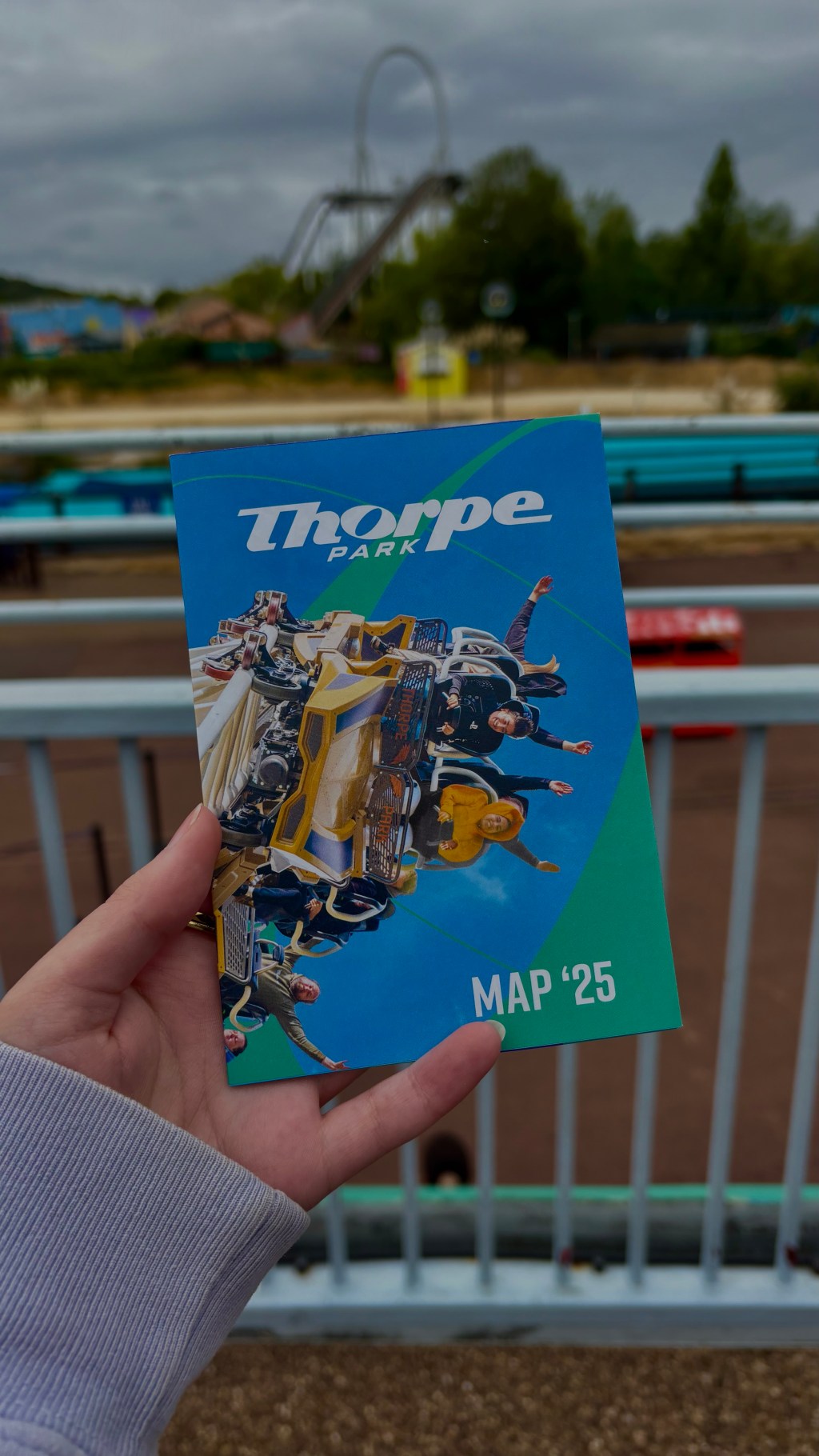

I visited Thorpe Park to see what sustainability looks like from a visitor’s perspective. And, as I discovered, there were some positives, a few surprises, and definitely some room for improvement.
Getting to the park
Visitor travel is an important consideration when assessing a theme park’s environmental footprint. With thousands of guests travelling to the resort, emissions associated with getting to and from the park can make up a significant part of its wider value-chain impact.
These emissions fall within Scope 3, which covers indirect emissions occurring across an organisation’s value chain. Understanding visitor travel patterns is therefore an important step towards identifying where emissions reductions can be achieved.
Thorpe Park provides a shuttle bus connection between Staines railway station and the park entrance, operating every 15 minutes. This gives visitors an alternative to driving directly to the resort and helps reduce transport emissions, particularly where public transport replaces individual car journeys.
An opportunity for Thorpe Park is to promote practical reduction measures. These could include highlighting rail-and-shuttle journeys during the booking process or encouraging car sharing.
Paper Maps vs Digital Technology
Paper maps vs digital technology presents another consideration when assessing a theme park’s environmental impact. Printed materials require raw materials, water and energy during production, alongside transport and eventual disposal. Digital alternatives can reduce the need for printing, but also rely on electronic devices, data infrastructure and energy consumption.
Thorpe Park offers visitors a choice between traditional paper maps and its mobile app, which provides features such as park navigation and ride wait times. Wait-time boards and signage around the park also provide information to help visitors plan their day.
An opportunity for Thorpe Park is to encourage digital map use while retaining paper maps for visitors who need or prefer them. Monitoring paper map printing volumes and reviewing how frequently maps become outdated could help identify opportunities to reduce material consumption and waste without compromising the visitor experience.
Recycling: Are the Facilities Working in Practice?
Waste management is an important consideration for theme parks, where high visitor numbers and food and beverage operations can generate significant volumes of waste in a short period. Effective recycling depends not only on providing the right infrastructure, but also on ensuring waste is segregated correctly and recyclable materials are collected appropriately.
During my visit, I noticed bins with separate compartments and clear signage to guide visitors on waste disposal. I also spotted Coca-Cola recycling bins designed to encourage the collection of drinks packaging. Clearly labelled, accessible bins can help improve waste segregation and reduce the risk of recyclable materials being disposed of as general waste.
However, I noticed that the Coca-Cola recycling bins appeared to be unavailable during my visit, despite recycling being promoted through the park’s sustainability messaging and visitor numbers being high.
This raises a wider question about greenwashing: how do we ensure that sustainability initiatives promoted to visitors are consistently delivered in practice?
While one visit is not enough to conclude that this is happening at Thorpe Park, it highlights why sustainability communications need to be supported by accessible facilities, effective implementation and measurable outcomes.
Ultimately, providing recycling bins is only the first step. The real impact depends on whether visitors can use them, whether waste is correctly segregated and what happens to those materials afterwards.
AI in Theme Parks: Considering the Environmental Impact
During my visit, I noticed AI-related signage and merchandise at Thorpe Park. This prompted me to consider how the adoption of these technologies fits into the wider sustainability conversation.
Generative AI relies on data centres and computing infrastructure that consume electricity and requires water for cooling. While the impact of an individual AI-generated image may be relatively small, resource consumption can accumulate as these technologies are used at scale.
Beyond the environmental footprint, there are also considerations around creative ownership and the contribution of artists and designers to the development of immersive experiences.
An opportunity for theme parks is to incorporate environmental considerations into decisions about AI adoption. As AI becomes more common across the sector, responsible use should consider not only what the technology can deliver, but also its environmental and creative implications.
So, how sustainable is Thorpe Park?
Ultimately, a single visit cannot provide a complete assessment of Thorpe Park’s environmental performance but my visit highlighted several ways sustainability can be reflected in the visitor experience, from public transport connections and digital navigation to the provision of recycling facilities. These are practical measures that can help support more sustainable operations, but their effectiveness depends on how consistently they are implemented.
The availability of recycling facilities was a particular concern during my visit. Where recycling is promoted as part of a park’s sustainability messaging, it is important that the infrastructure is accessible and operational when visitors need it. Otherwise, there is a risk of a disconnect between environmental commitments and the experience on the ground.
The growing use of AI also presents an emerging consideration, highlighting the importance of evaluating the environmental implications of new technologies alongside their intended benefits.
For Thorpe Park, strengthening the reliability of existing initiatives, measuring their effectiveness and ensuring sustainability messaging reflects operational reality would be valuable steps.



Leave a Reply