
Disney are known for creating immersive experiences, elaborate attractions and emotion-driving characters but behind all of that, there are some pretty interesting sustainability initiatives and a few that are genuinely unexpected.
I’ve been looking into some of the things Disney have done; from giving materials a second life, to turning old character costumes into insulation.
The animatronics…
One of my favourite examples of Disney reusing materials comes from their attractions.
When Monsters, Inc. Mike & Sulley to the Rescue! opened at Disney California Adventure, guests noticed that one of the CDA agents looked an awful lot like Drew Carey. The figure had originally appeared in Superstar Limo, a short-lived attraction that closed in 2002.
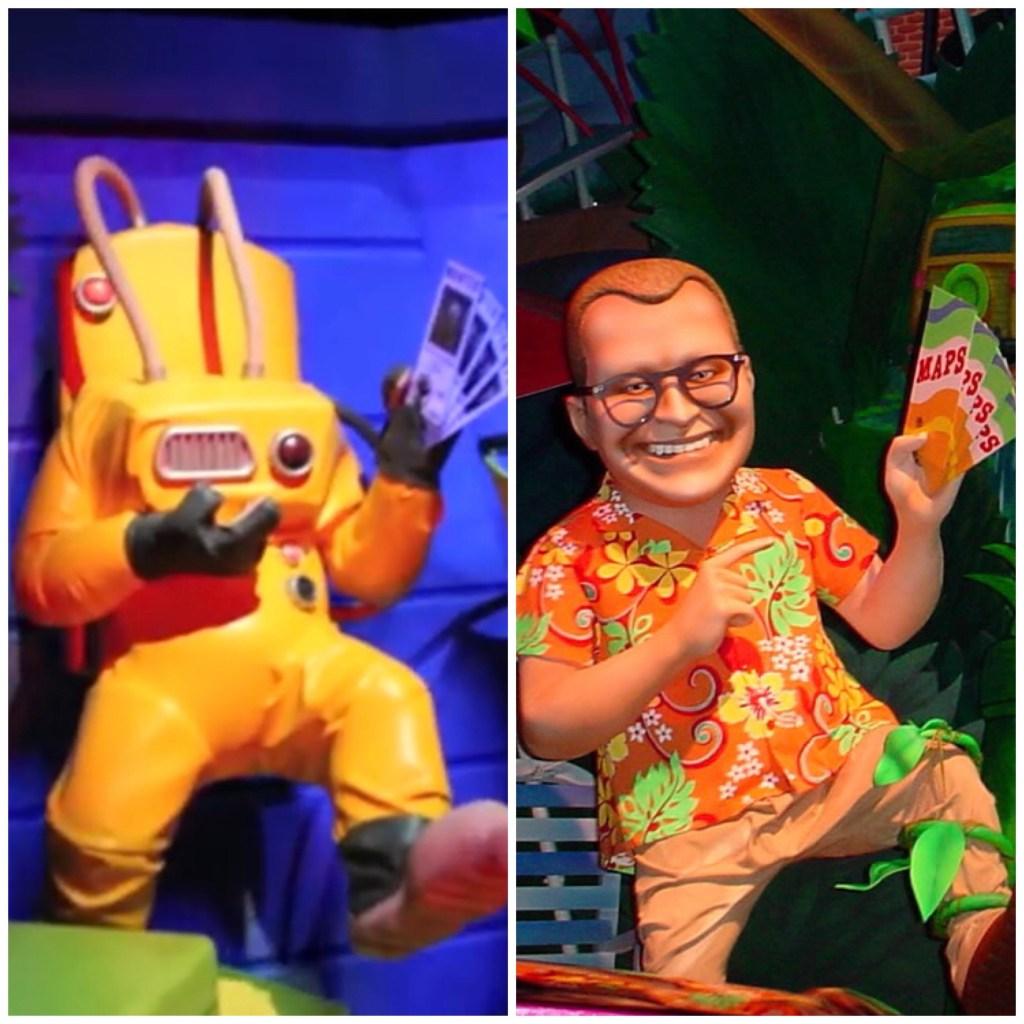
Rather than letting the figure go to waste, it was given a new role in the Monsters, Inc. attraction.
And Disney have a long history of reuse. When America Sings closed at Disneyland in 1988, many of its animal animatronics were refurbished and reused in Splash Mountain, which opened in 1989.
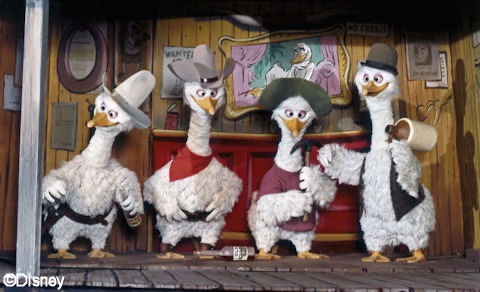
It’s a clever way of getting more use out of something that takes a lot of resources to create. Animatronics contain mechanical components, electronics and are overall a complicated component of attractions, so keeping existing figures in use is a great alternative to building everything from scratch.
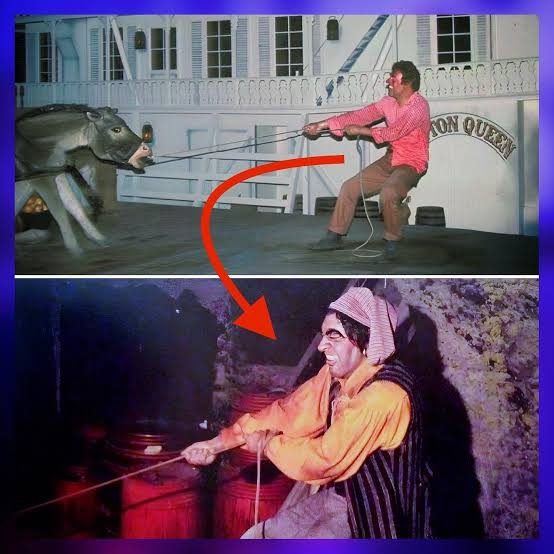
And with Disney attractions constantly evolving, it’s an interesting reminder that closing one ride doesn’t necessarily mean everything inside it has reached the end of its life.
The castle tarp…
When the Sleeping Beauty Castle at Disneyland Paris was refurbished in 2021, it was covered in a huge themed tarpaulin to protect it during the work.
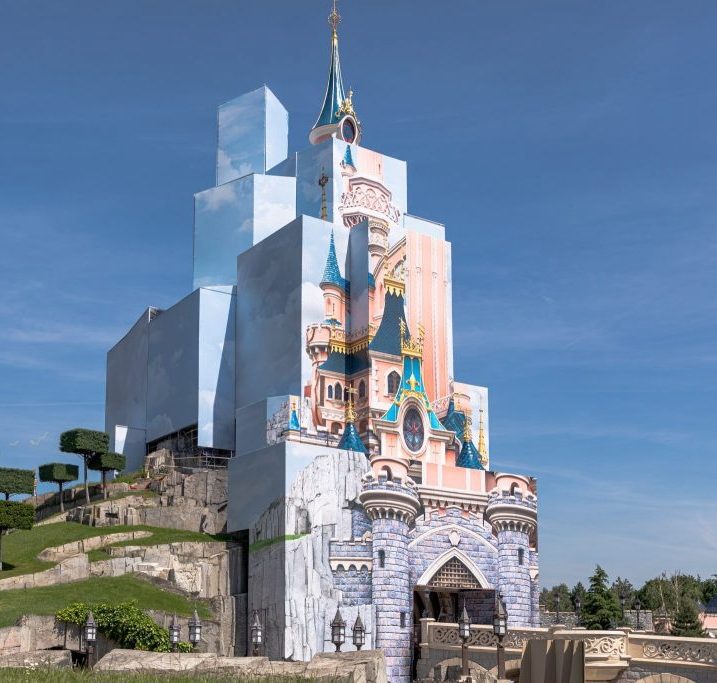
Once the refurbishment was finished, Disney could have treated the covering as waste. Instead, it partnered with French upcycling company Bilum and local workshops supporting people with disabilities to turn the material into a limited-edition collection of 2,300 accessories.
The collection included bags and other items that guests could buy and take home.
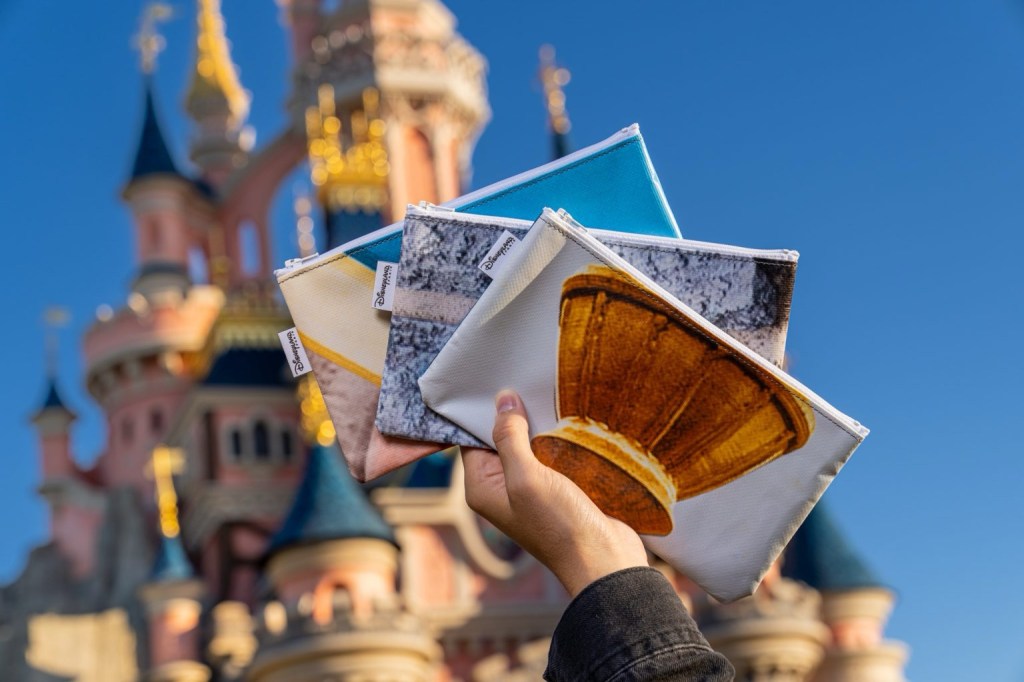
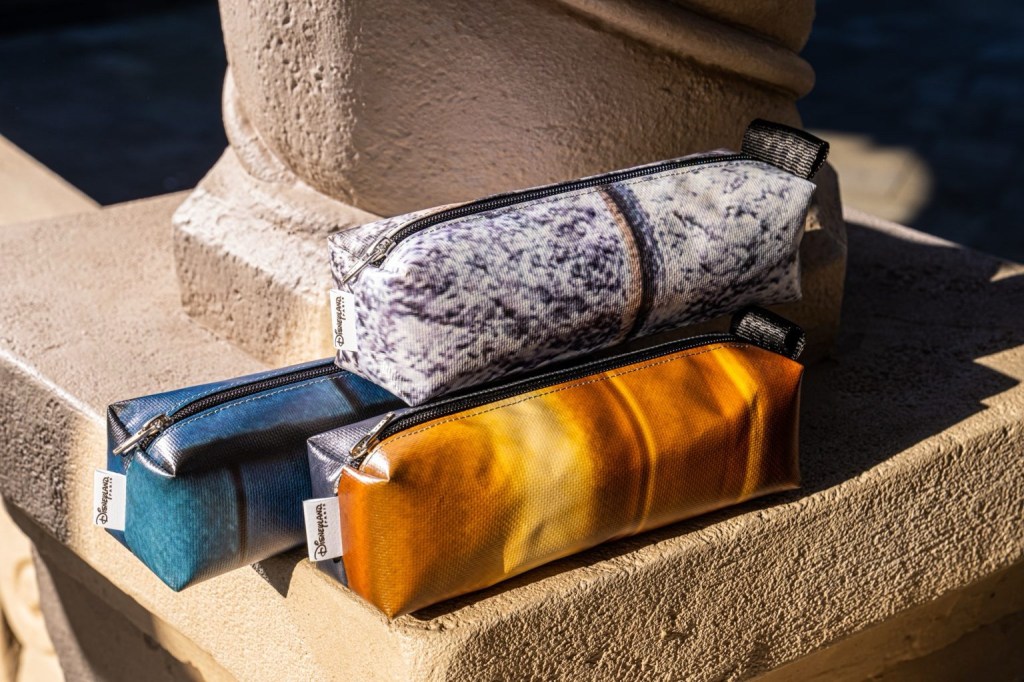
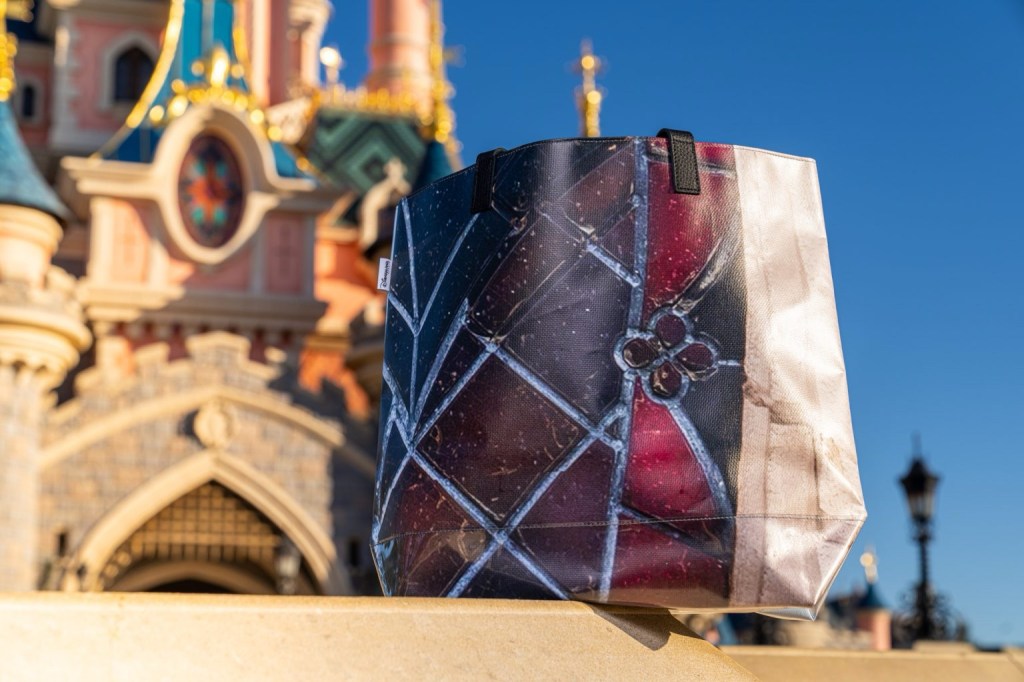
I love this example because the material had such a specific original purpose. A massive protective cover isn’t exactly something you’d expect to see turned into a handbag.
But rather than simply disposing of it, the project found a new use for the material and created something that people would actually want to keep.
It also brought in local partners, showing how an upcycling project can create opportunities beyond the original organisation.
The coffee grounds…
At Tokyo Disney Resort, they’ve found a use for something you probably wouldn’t think twice about throwing away: used coffee grounds.
The resort’s Circulating Smiles initiative looks at ways to give materials generated by its operations another purpose. One example involves collecting spent coffee grounds and sending them to specialist textile processors, where compounds in the grounds can be used to create a brown fabric dye.
That dye has then been used in Disney merchandise, including Mickey Mouse tote bags, aprons and caps.
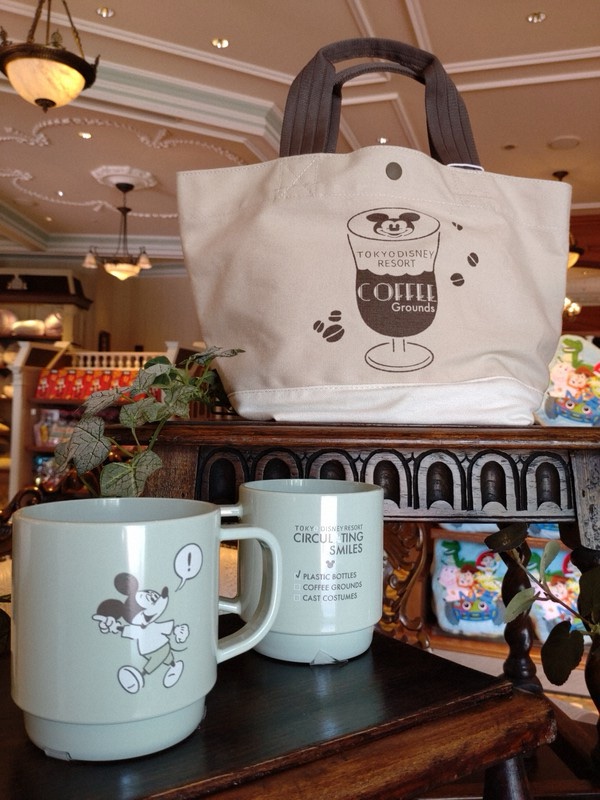
What I find interesting about this is how ordinary the original material is. Coffee grounds are something most of us would automatically put in the bin but they still contain useful materials that can be recovered and used in a different way.
Of course, the grounds don’t magically turn into a finished bag. There is still a process involved in collecting, transporting and processing and the overall environmental benefit depends on how that process compares with conventional alternatives.
But it is a good example of looking at a waste stream differently. Instead of asking how to get rid of something, the question becomes: could this be a resource for something else?
And then there are the costumes…
This might be my favourite example, partly because of how unexpected it is.
At Disneyland Paris, costumes that are too worn or damaged to be used again can be recycled rather than simply thrown away.
The fabric is broken down into fibres and mechanically processed into insulating felt, which can then be used in construction projects.
Disneyland Paris reported that nearly 15 tonnes of costumes were recycled through this initiative in 2023 and 2024, equivalent to roughly 33,000 costume pieces.
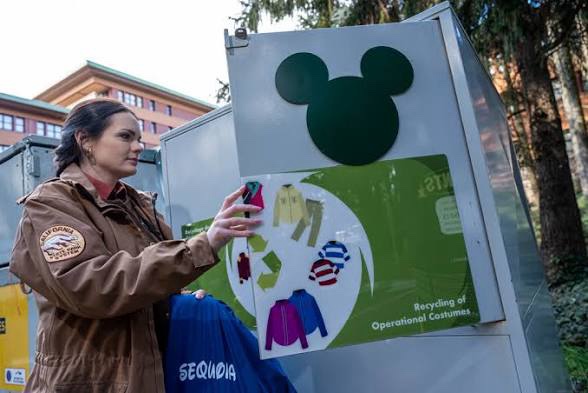
Textiles can be difficult to manage at the end of their useful life, particularly when garments have been made for very specific purposes. Turning them into insulation gives the material another use instead of treating it as something with no remaining value.
The initiative also involves local organisations that support employment for people with disabilities, adding a social element to the project.
What I found most interesting…
What I like about these examples is that none of them rely on creating something completely new from scratch.
Instead, Disney have found ways to make more use of things that already exist. An animatronic can move to another attraction, a castle cover can become a bag, coffee grounds can become fabric dye and old costumes can become insulation.
They’re all examples of circular thinking: keeping materials in use for longer and finding ways to recover their value rather than automatically treating them as waste.
Of course, reusing something doesn’t automatically make it the most sustainable option. There are still questions around processing, transport and energy use. But these projects show how a little creativity can open up alternatives to disposal.
And I think that’s particularly interesting in theme parks, where so much goes into creating the experience.
What I found most surprising is how much of this happens behind the scenes.
You visit Disney to enjoy the rides, meet characters and buy souvenirs. You’re probably not thinking about where the fabric dye came from or what happened to the animatronics from an attraction that closed years ago.
But sustainability doesn’t always have to be something guests notice directly. Sometimes it’s about making better use of resources in the background, without changing the experience people came for.
And sometimes, apparently, it means that a character costume ends up insulating a building.
Which of these surprised you the most?


Leave a Reply